
When chronopost tracking delays turned a 15-day shipment into a 45-day crisis, I learned that supplier reliability has nothing to do with manufacturing capability. It’s about what happens when logistics systems fail.
After twenty years manufacturing custom retail hangers for luxury brands, I’ve learned that product precision means nothing when your shipment sits in a Paris warehouse for 30 days.
We obsess over specular highlights on gold-plated logos. We control the walnut wood finish down to the substrate preparation. Then a streetwear client’s contact person quits, and the entire delivery architecture collapses.
This is what happened when a small-batch shipment to France entered what I now call a logistics death loop. The supplier reliability question isn’t about manufacturing capability. It’s about what happens when the system breaks.
The Setup: Cost Optimization vs. System Fragility
Small batch. Small CBM. Wooden hangers with custom finishes. Destination: Paris.
We were reading headlines about the dhl peak season surcharge 2025 news and made the call most suppliers make. Economy route: Europe Railway/Trucking plus DPD final delivery. Double Clearance & Tax Included channel.
Expected transit: 15 to 20 days. Actual duration: 45 days.
I’ve run this calculation a hundred times. The cost delta between economy and express looked quantifiable on a spreadsheet. What we couldn’t measure was control variance.
Phase 1: The Capacity Constraint Illusion
Late December. Peak season freight.
The problems started before the shipment crossed into France. I watched the tracking data telegraph the congestion building at the German consolidation hub.


The customs clearance services were processing documentation without issue. The physical distribution network was the bottleneck.
I’ve managed peak season logistics for two decades. You expect delays. You build buffer time. What you can’t predict is the equilibration failure that comes next.
Phase 2: The Information Asymmetry Problem
January 8th. Parcel reached France. DPD handed off to Chronopost.
Then silence.
January 17th. Tracking status turned red.

I contacted the client immediately. The specified receiver had left the company three weeks prior. Nobody updated the delivery instructions.
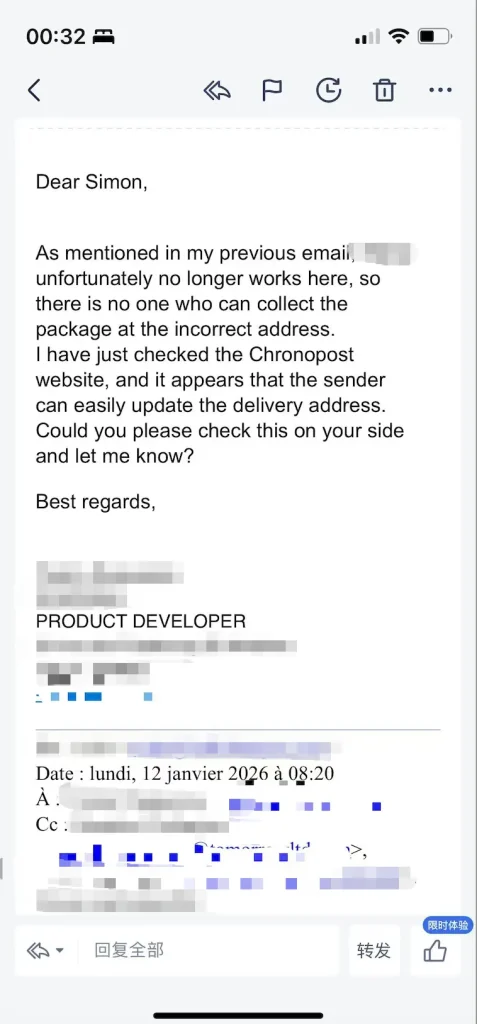
This is where economic networks show their architectural weakness. DHL and FedEx allow remote shipper intervention. You can update receiver information within their systems.
DPD’s architecture doesn’t support this. Driver arrives. Contact person isn’t there. Status: Undeliverable.
But here’s the system glitch: because no one formally refused the package, the automated return process didn’t trigger. The parcel entered the warehouse limbo. Not lost. Not moving. Sitting in a Paris depot cage with no processing instructions.
Phase 3: The Agent Communication Bottleneck
Sixteen days of active mitigation.
I activated our internal business crisis management plan and fought daily battles with logistics agents. The excuse aggregation was predictable: European strikes, snowstorms across the Benelux region, a warehouse fire in Lille.


The information chain stretched across five nodes: Us to agent. Agent to German hub. German hub to DPD. DPD to Chronopost depot. Each handoff added 24 to 48 hours of latency. By the time our return authorization request reached the Paris depot, three business days had elapsed.
Phase 4: Equilibration After 30 Days
February 3rd. Status update: After thirty days of warehouse stagnation and relentless escalation, tracking showed “Return to Sender.” The parcel was routing back to Germany for address correction and reshipment.
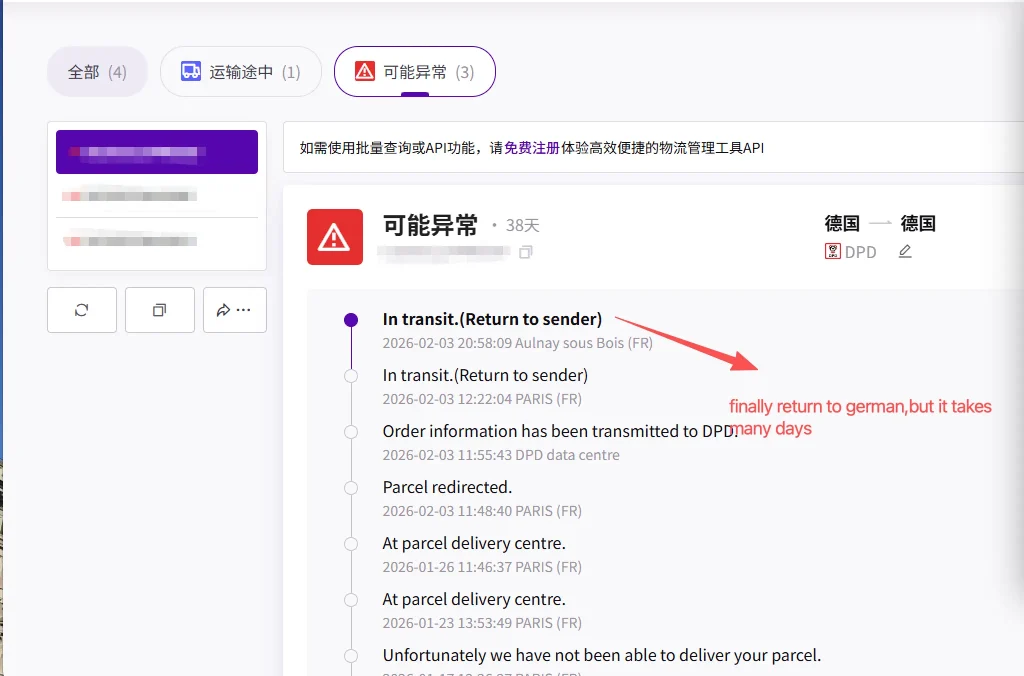
Resolution achieved. But the cost variance analysis told a different story.
DPD vs. DHL: A Structural Comparison
This event forced me to reassess our carrier selection protocols.
Economy Network Architecture (DPD/UPS/Chronopost)
Cost-efficient. Automated processing. Rigid exception handling.
Search “dpd germany tracking stuck” or “chronopost tracking delays” and you’ll find thousands of parallel cases. The pattern repeats: automated systems lack the flexibility required for B2B edge cases like mid-shipment personnel changes.
Not inherently flawed. Just inconsistent when personnel changes or address data becomes invalid mid-transit.
Premium Network Control (DHL)
Yes, the dhl peak season surcharge 2025 news adds cost pressure. But the premium buys architectural control.
DHL’s On Demand Delivery system allows receiver updates within a 24-hour window. We could have corrected the personnel divergence before the first delivery attempt. The cost delta between economy and express gets absorbed by a single failed delivery cycle.
I’ve measured this. One 30-day delay costs more in client relationship damage than twelve months of express shipping surcharges.
Mitigation Protocols for B2B Importers
If you’re importing custom retail hangers or other retail display systems, here’s what I’ve learned through documented failure:
1. Verify receiver employment status before shipment. Don't rely on static address databases. Use address verification services that include personnel confirmation. Email the specified receiver directly and request mobile contact information. This adds 48 hours to your lead time but prevents 30-day warehouse detention.

2. Calculate the full cost of economy routing. For samples or time-sensitive deliveries, economy savings disappear when your team spends 30 days troubleshooting a stalled shipment. The cost delta between economy and premium becomes negligible when you factor in labor hours and client relationship damage.

3. Assess your supplier's crisis response capability. Look for supplier reliability based on exception handling, not just manufacturing precision. Do they have a documented business crisis management plan? When transit fails, can they escalate through their agent network, or do they forward you the tracking number and wish you luck?
I’ve managed shipments for established brands around the world. The suppliers who keep those accounts are not the ones offering the lowest FOB. They’re the ones who understand that logistics is part of the product.
At HelloHanger, we manufacture hangers and manage the complete delivery chain. We can't control weather patterns or labor strikes.

What we can control: transparency on transit status, documented escalation when systems fail, and the decision to route through networks that allow remote intervention when variables change.

That's the difference between a supplier and a partner.